*** ATTENTION U.S. CUSTOMERS ***
Please remember that there is a 15% Tariff (aka Duty & Import Tax) that you must pay directly to U.S. Customs when your parcel arrives in the U.S.
*** IMPORTANT SHIPPING & DELIVERY NOTICE ***
Some international couriers continue to experience shipping delays.
We recommend you buy early and in bulk to avoid the impact of these delays.For 25+ years, we've been supporting a Healthy Body, Strong Spirit and Clear Mind!
Providing superior quality medicinal mushroom supplements
to customers in 74 countries around the world.Buy More & SAVE Big

- Tap for Navigation
- Dietary Supplements ▼
- » Dr Alla's Cordyceps
- » Dr Alla's Lion's Mane
- » Dr Alla's Maitake
- » Dr Alla's Reishi
- » Dr Alla's Shiitake
- » Testimonials
- Symptoms Chart
- Get Advice ▼
- » FAQ
- » Health Consultations
- Dr Alla's Insights ▼
- » Medical Conditions
- » Mushroom Properties
- » Research Info ►
- » » Medical Quotes
- » » Reference Works
- » » Mushrooms - Why Special?
- About ▼
- » Dr Alla's Story
- » Testimonials
- » Trade Enquiries
- » Contact
- Customer Info ▼
- » Access My Account
- » Track My Order
- Navigation
- Dietary Supplements ▼
- » Dr Alla's Cordyceps
- » Dr Alla's Lion's Mane
- » Dr Alla's Maitake
- » Dr Alla's Reishi
- » Dr Alla's Shiitake
- » Testimonials
- Symptoms Chart
- Get Advice ▼
- » FAQ
- » Health Consultations
- Dr Alla's Insights ▼
- » Medical Conditions
- » Mushroom Properties
- » Research Info ►
- » » Medical Quotes
- » » Reference Works
- » » Mushrooms - Why Special?
- About ▼
- » Dr Alla's Story
- » Testimonials
- » Trade Enquiries
- » Contact
- Customer Info ▼
- » Access My Account
- » Track My Order
Dr Alla’s Lion’s Mane Mushrooms
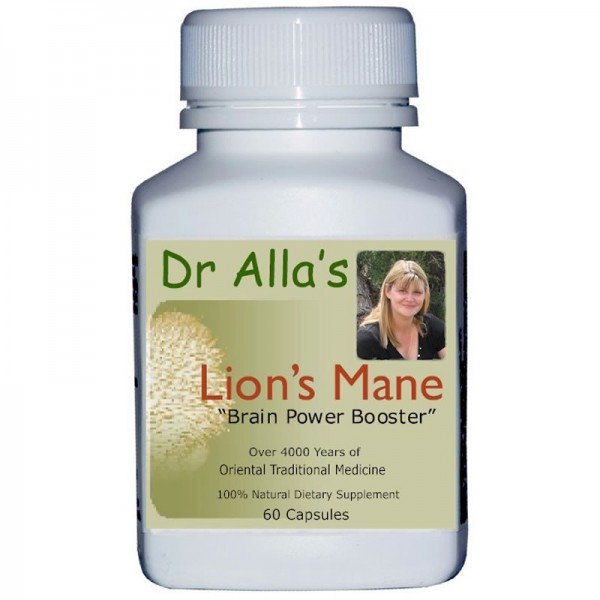
"Brain Power"
Supports:
- Adaptation to mental and physical stress
- Circulatory and cardiovascular function
- Cognitive function and mental clarity
- Digestive function
- Immune system communication
- Memory and concentration
- Nervous system integrity and resilience
- Respiratory function
$39 NZD (approx. $25 USD)
60 capsules x 250mg
ATTENTION INTERNATIONAL CUSTOMERS:
IMPORTANT: Our prices are listed in New Zealand Dollars.
You will see the purchase amount in your own currency BEFORE
you complete your checkout on the PayPal or Afterpay payment page.
To order this product, enter your desired number of bottles and click the "Add to Cart" button .
You can also adjust the number of bottles in your shopping cart by using the plus/minus buttons.To add other products to your shopping cart, simply go to that product page and repeat the above process.
Supports
What This Mushroom Supports
Based on its traditional use and the nature of its bioactive compounds, Hericium erinaceus has most commonly been associated with support for the following physiological areas:
Adaptation to mental and physical stress
Associated with nervous system regulation and the body’s ability to remain steady and responsive during periods of prolonged demand.Circulatory and cardiovascular function
Associated with physiological processes involved in circulation and vascular regulation, supporting efficient blood flow as part of overall systemic balance.Cognitive function and mental clarity
Associated with processes involved in attention, learning, and clear thinking, particularly during sustained mental effort.Digestive function and gastrointestinal resilience
Traditionally associated with digestive comfort and the body’s ability to tolerate physical or environmental stress.Immune system communication
Associated with immune signalling and coordination rather than stimulation or suppression.Memory and concentration
Associated with cognitive processes involved in information processing, recall, and sustained focus.Metabolic balance
Associated with processes that support efficient energy use and internal regulation.Nervous system integrity and resilience
Traditionally associated with maintaining healthy nerve structure, communication, and long-term nervous system support.Respiratory function
Associated with physiological processes involved in breathing efficiency and oxygen handling.
Bioactivities
Bioactive Compounds & Their Physiological Roles
Hericium erinaceus, commonly known as Lion’s Mane, has attracted long-standing interest because of its distinctive relationship with the nervous system. That interest is rooted not in a single compound, but in a small group of bioactive constituents that interact with processes involved in neural communication, maintenance, and adaptation.
Hericenones
Hericenones are a group of characteristic compounds found in the fruiting body of Hericium erinaceus. They have attracted attention because of their relationship with nerve growth factor (NGF) and the biological processes involved in neural maintenance and repair.
NGF is essential for the health and survival of nerve cells. It plays a role in supporting the structure of neurons and the connections between them. For this reason, compounds associated with NGF are of interest when looking at how the nervous system maintains clarity, stability, and resilience over time.
What is important to understand is that hericenones are not associated with stimulating nerve activity. Instead, they are studied for how they may support the body’s own regulatory pathways that help preserve neural structure and communication. This distinction matters, because it separates Lion’s Mane from substances that simply push the nervous system to work harder.
In practical terms, hericenones help explain why Lion’s Mane has traditionally been associated with mental clarity and steadiness rather than with short-term alertness. The emphasis is on supporting the quality of neural signalling, not increasing its intensity.
This helps explain why Lion’s Mane has traditionally been associated with mental clarity, memory, and nervous system resilience.
Erinacines
Erinacines are a distinct group of compounds found in Hericium erinaceus, particularly in the mushroom’s mycelium. They are of special interest because of their close association with nerve growth factor (NGF)–related pathways.
NGF plays a central role in the growth, maintenance, and protection of nerve cells. Because of this, compounds linked with NGF have attracted attention in the context of long-term nervous system health, rather than short-term changes in alertness or mood.
What is important to understand is that erinacines do not act like stimulants. They are studied for how they may support the body’s own capacity to maintain and protect neural structure, including the pathways involved in communication between nerve cells.
Together with hericenones, erinacines help explain why Lion’s Mane is often discussed in relation to neural integrity, myelination, and cognitive resilience over time. The interest lies in supporting the foundations of the nervous system - the wiring and its maintenance - rather than forcing faster or stronger signalling.
How These Compounds Work Together
Together, hericenones and erinacines help explain why Lion’s Mane is so often discussed in relation to neural integrity, myelination, and cognitive resilience over time. While they originate from different parts of the mushroom, their significance lies in how they support complementary pathways involved in nerve maintenance and communication.
The interest here is not about forcing the nervous system to perform, but about supporting the foundations of neural health - the structure, insulation, and organisation that allow signals to travel efficiently and reliably.
This focus on maintenance rather than stimulation is a defining feature of Lion’s Mane.
Polysaccharides
Hericium erinaceus contains naturally occurring polysaccharides that are widely studied for their role in immune communication and systemic regulation. Rather than acting as stimulants, these compounds are better understood as helping the body coordinate information between systems.
One way to think about polysaccharides is as messengers. They interact with immune cells that are involved in surveillance and signalling. These are the systems the body uses to notice what is happening internally and to decide how to respond. This does not mean pushing the immune system to be more aggressive, but rather supporting clarity and balance in communication.
This matters because the immune system does not work in isolation. It is closely linked with the nervous system and the digestive system. When communication between these systems is clear and well regulated, the body tends to cope better with stress - whether that stress is physical, mental, or environmental.
In the context of Lion’s Mane, this helps explain why polysaccharides are often discussed alongside nervous system support. A well-regulated immune response creates a more stable internal environment, which is essential for neural maintenance, repair, and resilience over time.
Seen this way, polysaccharides are not about “boosting” anything. They are about helping the body stay organised, responsive, and adaptable, especially during periods of prolonged demand.
This interaction supports coordination between the nervous system, immune system, and digestive system - an important relationship when the body is under physical or mental stress.
Proteins and Amino Acids (including Glutamic Acid)
Lion’s Mane provides a natural source of proteins and amino acids, including glutamic acid, which plays a central role in how the nervous system functions. Amino acids are the basic building blocks the body uses not only for tissue repair, but also for the production of neurotransmitters and the maintenance of neural pathways.
Glutamic acid is particularly important because it is closely involved in neural communication and learning processes. It participates in signalling pathways that allow nerve cells to transmit information efficiently, which is fundamental to memory, focus, and cognitive processing. In balanced amounts, it supports normal brain activity and mental responsiveness.
Alongside glutamic acid, the broader amino acid profile of Lion’s Mane contributes to the nutritional environment the nervous system depends on. Together, these amino acids help support ongoing neural maintenance and metabolic support, rather than driving stimulation.
In this context, Lion’s Mane is best understood as providing foundational nutritional support for neural signalling and cognitive function - helping the system function as it should, rather than pushing it beyond its natural limits.
Compounds Associated with Myelination and Neural Integrity
One of the most compelling areas of interest around Lion’s Mane relates to myelination - the process by which nerve fibres are insulated with a protective sheath called myelin. This insulation is essential for efficient nerve signalling. Without it, messages between the brain and the rest of the body slow down, become less precise, or fail to transmit properly.
Myelin is not something the body forms once and forgets. It is dynamic. It is built, maintained, and repaired throughout life and it is particularly vulnerable during periods of prolonged stress, inflammation, injury, or aging. When myelination is compromised, the effects are often felt as mental fatigue, reduced clarity, slower processing, or a general sense that the nervous system is “not firing as cleanly as it used to.”
Lion’s Mane has drawn attention because some of its compounds are studied for their involvement in pathways that support nerve growth factor (NGF) and related processes that influence neural maintenance and repair. NGF plays a key role not only in neuron survival, but also in the health of the structures that allow nerves to communicate efficiently.
What makes this especially remarkable is that Lion’s Mane does not appear to act as a stimulant to the nervous system. Instead, it is associated with supporting the conditions under which the nervous system maintains its own structure and integrity. In other words, the focus is on preserving and supporting the wiring itself, not forcing the signal.
This helps explain why Lion’s Mane has traditionally been associated with mental clarity, steadiness, and cognitive resilience over time - rather than with short-term alertness or artificial stimulation. The interest lies in how well the system is built and maintained, not how loudly it is pushed.
How to Think About This Section
Lion’s Mane is best understood as a mushroom associated with nervous system support at a structural and functional level. Its bioactive compounds participate in pathways related to neural communication, maintenance, and adaptation rather than producing immediate or forced effects.
This explains why Lion’s Mane has traditionally been valued for mental clarity and focus, and why modern research continues to explore its relationship with brain and nervous system health.
Health Uses
Traditional Use & Modern Understanding
Traditional Use & Cultural Context
Hericium erinaceus has held a special place in East Asian traditions for centuries, not only as a medicinal mushroom, but also as a highly valued food.
In China and Japan, Lion’s Mane has long been associated with the nervous system and mental clarity.
This magnificent mushroom’s appearance alone made it memorable - cascading white tendrils that are slightly ice-like translucent and rubbery when touched, visually resemble a lion’s mane.
It acquired a variety of traditional names, including Monkey Head, Bear’s Head, and Hedgehog Mushroom. In Japan, it is known as Yamabushitake, named after the Yamabushi monks whose ascetic practices required mental focus, endurance, and clarity.
Traditional stories often described Lion’s Mane as a mushroom for “strong nerves” and a clear, steady mind. While these accounts were not scientific in nature, they reflect a long-standing observational pattern: Lion’s Mane was associated with calm alertness, memory, and mental resilience rather than stimulation or sedation.
Legends tell us that the ones that regularly consume this mushroom would have the steel nerves and memory of a lion.
Beyond its medicinal reputation, Lion’s Mane was also prized as a culinary delicacy. It was considered one of the four most famous mushrooms in Chinese cuisine, valued for both its flavour and texture.
When prepared at the right stage of growth, its flesh has a soft, seafood-like quality, often compared to lobster or squid. This dual role - as both food and medicine - helped integrate Lion’s Mane into everyday life rather than reserving it only for illness or special occasions.
Modern Perspective
Modern interest in Lion’s Mane has followed naturally from these long-standing observations. Rather than asking whether the mushroom “treats” specific conditions, researchers have focused on understanding why it has such a consistent association with nervous system support.
Scientific attention has centred on Lion’s Mane’s unique compounds and their relationship with nerve growth factor (NGF) and related pathways involved in neural maintenance, repair, and communication.
This line of inquiry aligns closely with traditional descriptions of Lion’s Mane as a mushroom that supports mental clarity and nervous system resilience and integrity over time.
What makes Lion’s Mane particularly interesting from a modern perspective is that it does not behave like a stimulant.
People are not drawn to it for quick alertness or artificial energy. Instead, interest tends to focus on how well the nervous system is supported structurally and functionally, especially during periods of prolonged mental demand, stress, or aging.
Today, Lion’s Mane sits at the intersection of traditional wisdom and modern neuroscience.
Its long history of culinary and medicinal use, combined with ongoing research into its bioactive compounds, reflects a consistent theme: this is a mushroom associated with clarity, steadiness, and resilience of the nervous system, rather than with dramatic or immediate effects.
At the same time, research interest in Lion’s Mane has extended beyond the nervous system and the brain alone.
The modern investigation has explored how it may support regulation within the entire gastrointestinal system and the digestive function. This reflects the close connection between the gut, immune system, and nervous system.
The scientific research reflects the traditional observations that linked Lion’s Mane with overall balance rather than isolated effects.
Lion’s Mane polysaccharides have also attracted attention for their role in immune communication. Rather than acting by directly attacking problems, these compounds are studied for how they help the immune system coordinate and respond appropriately. This type of support is about organisation and balance, not stimulation.
In addition, Lion’s Mane has been associated with cardiovascular and respiratory function. Traditional observations linked it with circulation and breathing capacity, and modern research interest continues to explore how the mushroom supports these systems as part of overall physiological resilience.
Taken together, these areas of interest suggest that Lion’s Mane works across multiple interconnected systems - nervous, cardiovascular, respiratory, and digestive - providing support to the systems involved in circulation, metabolism, physiological and mental resilience.
Lion’s Mane is helping the body maintain structure, communication, and balance over time.
Components
Nutritional & Naturally Occurring Components
Hericium erinaceus naturally contains a range of compounds that contribute to its overall nutritional and biochemical profile.
- Polysaccharides
- Hericenones
- Erinacines
- Proteins
- Amino acids (including glutamic acid)
CONTACT INFO
021 227 9922 (NZ)
+64 21 227 9922sales@medimushrooms.co.nz
MS Teams: alla.kiroshka
We ship globally to 74 countries and locally to all regions of New Zealand. Local shipping destinations include Auckland, Bay of Plenty, Gisborne, Hawke's Bay, Manawatu-Whanganui, Northland, Taranaki, Waikato, and Wellington on the North Island. As well as Canterbury, Marlborough, Nelson, Otago, Southland, Tasman, and West Coast on the South Island.

Top NZ cities and towns we ship to include Alexandra, Arrowtown, Ashburton, Auckland City, Blenheim, Bluff, Cambridge, Christchurch, Cromwell, Dannevirke, Dargaville, Dunedin, Eltham, Feilding, Gisborne, Gore, Greymouth, Hamilton, Hastings, Havelock North, Hawera, Hibiscus Coast, Hokitika, Huntly, Invercargill, Kaikoura, Kaitaia, Kāpiti Coast, Katikati, Kawerau, Kerikeri, Levin, Lower Hutt, Manukau City, Marton, Masterton, Matamata, Morrinsville, Motueka, Napier, Nelson City, New Plymouth, Ngaruawahia, North Shore, Oamaru, Otaki, Palmerston North, Paraparaumu, Picton, Porirua, Queenstown, Rolleston, Rotorua, Stratford, Taupo, Tauranga, Te Awamutu, Te Puke, Thames, Timaru, Tokoroa, Upper Hutt, Waihi, Wanaka, Warkworth, Wellington City, Wellsford, Westport, Whakatane, Whanganui, Whangarei, Whitianga.
Copyright © 2004 - 2026 MediMushrooms International Ltd
DISCLAIMER: The information on this website has been researched, reviewed and presented with all due care.
Nevertheless, the content is provided for general education and information only and should not be relied upon in making,
or refraining from making, any decision. It is NOT intended to replace medical advice from a healthcare professional.
All users are urged to seek advice from a qualified healthcare professional for diagnosis, treatment and answers to their medical questions.
Use products as directed. If symptoms persist, please see your healthcare professional.Specific results expressed herein are not typical. Individual results will vary.